
Important Figures in the Development of MMT: Economist Georg Friedrich Knapp: ‘Money is a Creature of the State’
Important Figures in the Development of MMT: Economist Georg Friedrich Knapp: ‘Money is a Creature of the State’

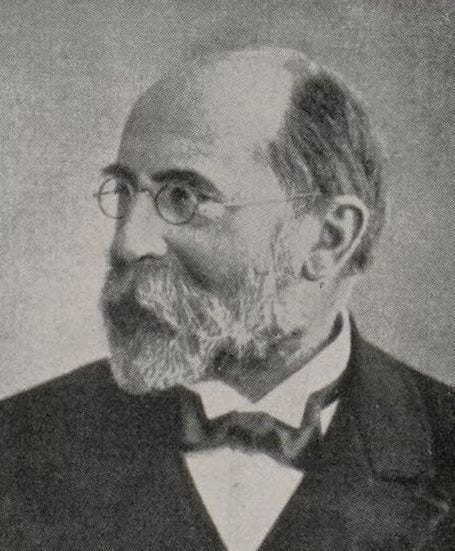
“perhaps the only book on monetary theory that is wholly original.” John Maynard Keynes on The State Theory of Money
Economist Georg Friedrich Knapp (1842–1926) was a contrarian – he rejected the conventional wisdom of his day, particularly on the nature of money and the reliance on abstract economic theory to analyse how economies work. He preferred to study how real economies functioned in specific historical contexts.
Although he was never a public figure, Knapp popularised many of the core ideas that underpin MMT. He coined the term ‘Chartalism’ (from the Latin word charta, meaning ‘token' or ‘ticket’) to express the idea that money is not a commodity born of barter but derives its value from authority. And he rejected the orthodox view that the value of money had to be backed by gold or silver. This at a time, in the late 19th century, when many countries were moving to the gold standard (as I said, he was a contrarian).
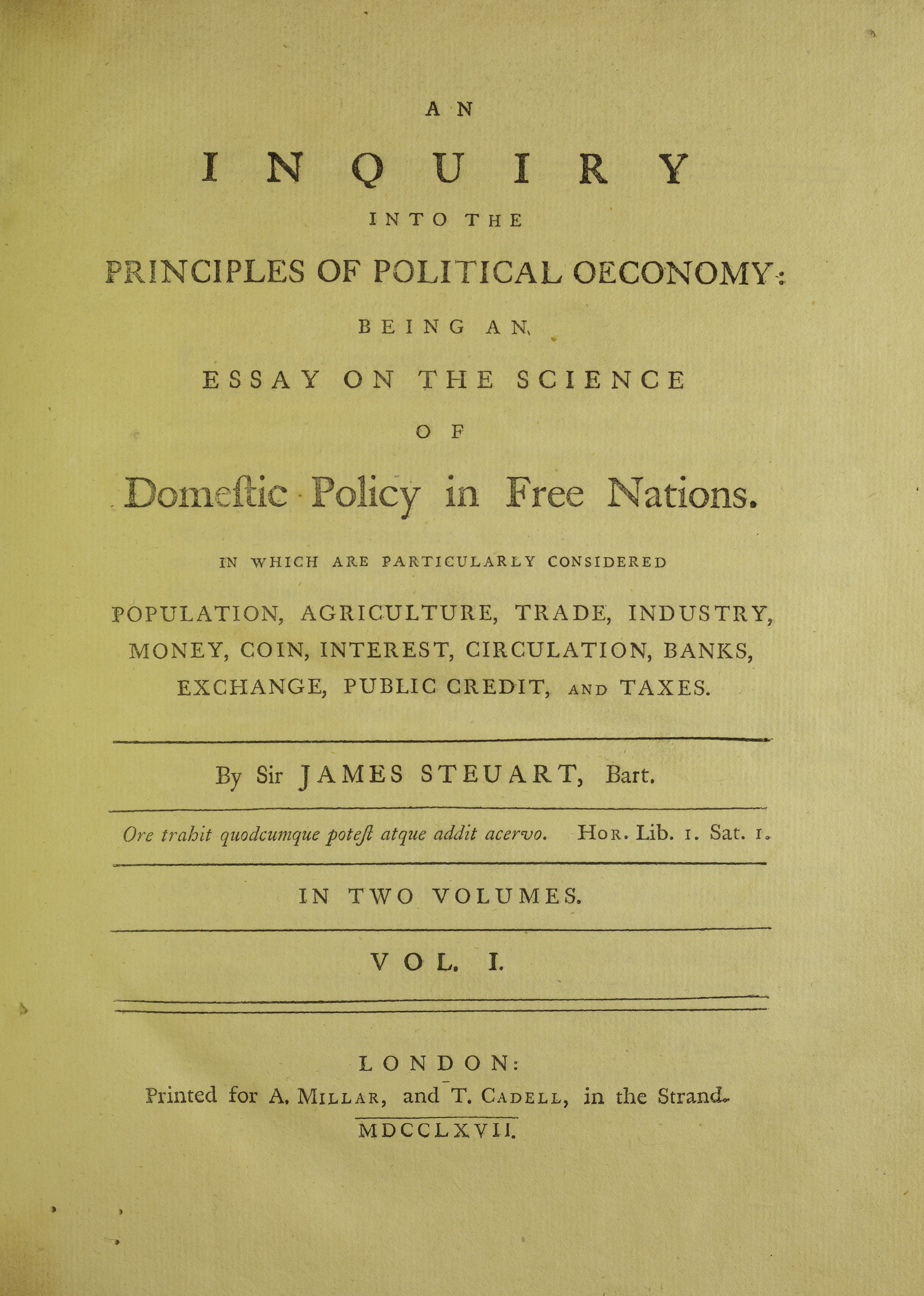
That’s not to say that Knapp was the first to espouse such ideas. Similar views had been expressed by others, including Plato (c. 427–347 BCE), who saw money as a social convention, Aristotle (384–322 BCE), who distinguished between money as a medium of exchange and its role as a standard measure of value, Jean Bodin (1530–1596), who argued that sovereign power includes the ability to define and control money and the Scot, James Steuart (1713–1780), who wrote in An Inquiry into the Principles of Political Economy (1767) that money is a product of state intervention rather than something that emerges naturally from barter.
"The state is the author of money, and that the value of money depends upon the public faith. It is the government that gives the coin its value by enforcing its use in paying taxes and fulfilling obligations." (James Steuart, An Inquiry into the Principles of Political Economy, 1767)
New on MMT101: MMT online training course – from first steps to advanced
If you want to learn MMT from the ground up, take my MMT online training course, MMT101 – The Why, The What and The How of Modern Monetary Theory. Paid subscribers get access at no additional cost – just message me.
Knapp’s State Theory of Money is published in 1924
However, despite his lack of public visibility beyond academia, and the prior existence of these ideas, it was Knapp who popularised them in his book The State Theory of Money. He was the first to present a fully realised theory of money, explaining that its value comes from the state’s ability to enforce its use—through taxation and the law.
Georg Friedrich Knapp and Modern Monetary Theory (MMT)
Knapp’s ideas underpin MMT’s understanding of sovereign currency today. He argued that money is a creation of the state, not something governments need to earn or borrow.
"Money is a creature of the legal order. It is not a commodity produced by the free market but a token created by the state. The validity of a currency is not derived from the material it is made of, but from the law that enforces its acceptance." Knapp, Georg Friedrich. 1924. The State Theory of Money. Translated by H. M. Lucas and J. Bonar. London: Macmillan.
This is consistent with the MMT approach: a sovereign government spends first and collects taxes later. Or as Stephanie Kelton put it in her book The Deficit Myth currency-issuing governments spend first, then tax and/or borrow. Stephanie Kelton summarised this using the acronyms STABs and TABS. STABs stands for, spend then tax and/or borrow, i.e. currency-issuing governments do not tax and borrow first in order to spend—which is the orthodox story, as represented by the acronym TABS.
Knapp And The Purpose Of Taxation
Knapp also understood the real purpose of taxation, i.e. it is not to fund spending but to drive demand for the currency. That insight sits at the heart of MMT, which explains how tax obligations create demand for a national currency.
Knapp And Fiat Currencies
Knapp also played a big part in dismantling the idea that money has to be tied to gold or any other commodity. Without that shift, we would not have the modern understanding of fiat money. And without fiat currencies, we would not have had MMT as we understand it today. A currency that is fixed to the value of a limited commodity is, by definition, a scarce currency. MMT demonstrates that for currency-issuing governments it is not finance that is limited or scarce; it is real resources—i.e. people, factories, knowledge, raw materials and so on.
What is a token money system? Unlike classical economists, who saw money as evolving from valuable commodities like gold or silver, Knapp viewed it as a system of tokens used for transactions. In other words, money has value because people accept it in exchange for goods and services, not because it is made of something inherently valuable. A fiat currency is a specific type of token money, one issued by a government and given value through state enforcement, such as taxation. The word 'token' comes from the Old English tācn, meaning 'sign, mark, or symbol.' In a token money system, money is a concept rather than a physical commodity - it is a symbol of value. It can take various forms, such as coins, paper notes, or digital balances, but its value comes from collective acceptance and government backing, not from the material itself.
What is a commodity money system? A commodity system is when money is considered to have value due to its physical substance. The supply of money is often limited by the availability of the commodity. Therefore, governments consider money to be scarce: they cannot issue money freely. The gold standard is based on the idea of commodity money: money issued must be backed up by the availability of gold.
Note, that paid subscribers resources are now on this page. Downloadable factsheets, a downloadable dictionary of economic jargon, my book/journal recommendations and more.
About Georg Friedrich Knapp
Georg Friedrich Knapp (1842–1926) was a German economist who was born in Gießen, Hesse. He studied at the University of Munich and the University of Berlin, where he came under the influence of the German historical school of economics—a school of individuals who saw institutions and state policies as crucial in shaping economies. Knapp became a professor at the University of Strasbourg in 1874. He was influenced by Wilhelm Roscher and his peers in the historical school, however, Knapp rejected their commodity-based theories of money. In his most well known work, The State Theory of Money (1905) he argued that money is a creation of the state; legally backed by the government, not a commodity tied to something like gold. This idea went on to influence figures like John Maynard Keynes and set the stage for Modern Monetary Theory (MMT).
Little known facts related to Georg Friedrich Knapp
Knapp raised his two daughters as a single parent due to his wife Lydia Ossipowna Knapp's mental health issues.
Knapp’s book, The State Theory of Money was banned by the Nazis in 1940: it is thought that this was due to his rejection of the idea that money was a commodity with intrinsic value.
Knapp’s son Elmar was a Radical Politician who became involved in socialist and communist movements.
John Maynard Keynes praised The State Theory of Money, saying that it was “perhaps the only book on monetary theory that is wholly original.” It was Knapp who planted the intellectual seeds that grew into the MMT’s framework today.
That’s all for now. Don’t forget to subscribe to support MMT101DOTORG. Spread the word that a better world is possible.
Links to some of my most popular newsletters
Become a paid subscribers for access to additional content:
A Permanent Home for MMT101 Paid Subscriber Resources – Factsheets, book recommendations, academic papers, MMT podcasts and more.
MMT Factsheet 3: If Taxes Are Not For Spending What Are They For?
Support MMT101.org by Becoming a Paid Subscriber
If you are enjoying these articles and find them a useful part of your Modern Monetary Theory (MMT) education, please support MMT101.ORG—if you can—via small donation. Your help will allow me to continue this work and reach & teach more people. If you can’t do that, consider sharing the articles and podcasts. By subscribing and supporting, not only will you learn how the economy works, but you will also be part of the efforts to change people’s lives for the better. I do not have the power to do that alone, but as an ever-expanding group who understand that there is a better way, we can make a difference.
Thanks,
Jim
Don’t forget to subscribe. Become a paid supporter of MMT101DOTORG and help change the world for the better.